OVERVIEW OF PROGRAM MODEL
Overview of Program Model
Project
Eye-To-Eye was founded by Jonathan Mooney and David Flink in 1997 as a grassroots
public service project run by and for students with labels such as learning
disabled (LD) and attention deficit hyperactivity disorder (ADHD). The program
had one simple goal: match college and high school students labeled with LD/ADHD
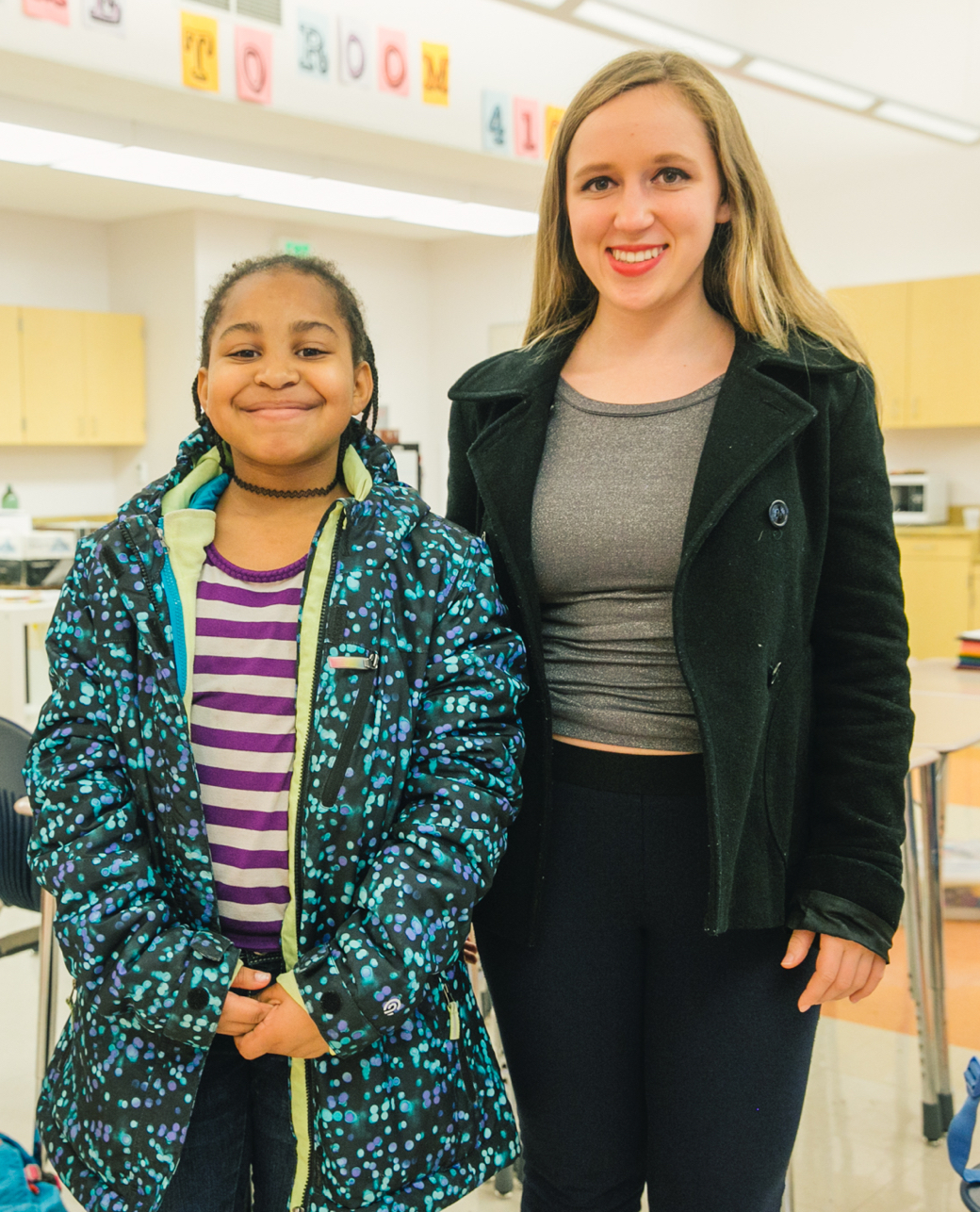
with labeled elementary and middle school students as role models, tutors, and
mentors as a means to empower children's learning and give them hope for their
future. Project Eye-To-Eye is one of the few programs in the country that challenges
the deficit and pathology driven service model stifling the LD/ADHD community,
and is playing a revolutionary and transformative role in empowering students
labeled with LD/ADHD, one of the most marginalized minority groups in our society.
To achieve this mission, Project Eye-To-Eye partners with local communities, public and private schools, universities, and local businesses to bring adults labeled with learning disabilities into the lives of students labeled with learning disabilities. Project Eye-To-Eye supports the families of Project Eye-To-Eye children through access to family networks, and educational outreach. Project Eye-To-Eye has also developed a growing national community through the use of the Internet and community outreach to facilitate a national dialogue around labeled learning disabled students, alternative learning styles, and educational reform.
Back to Top

Our Outcomes
Project Eye-To-Eye's mentoring model is designed to achieve three tangible and measurable objectives in our target population of students with learning disabilities to: 1) build self-esteem, 2) improve self-advocacy behaviors, and 3) develop meta-cognitive skills. Based on research conducted by Harvard University Graduate School of Education and Columbia University Teachers College, Project Eye-To-Eye has been shown to:
- Improve school attitudes and self-esteem; 98% of students report increased
self-esteem through participation in the program.
- Improve self-advocacy behaviors; 87% of students report they felt that participation in the program helped them learn how to advocate for themselves.
- Improve meta-cognitive skills; 88% of students indicate they felt that being in the program improved their ability to understand how they learn.
Back to Top

Project Eye-To-Eye's Core Program Principles
Project Eye-To-Eye seeks to develop local independent mentoring programs around the nation that adhere to the Project Eye-To-Eye Program Model. These local mentoring programs are called Project Eye-To-Eye Chapters. Modeled in part on the Coalition of Essential Schools Common Principles, Project Eye-To-Eye's organizing model is to create local, autonomous mentoring programs that are united in a national coalition by Project Eye-To-Eye's basic core programming principles.
- Mentoring and Hope: Giving students with learning disabilities hope
by bringing a mentor into their lives who can model success and empowering
them to imagine a positive future.
- Asset Based Academic Empowerment: Mentors providing mentees with skills
that facilitate academic empowerment.
- Beyond Normal Art Club: Empowering students to develop their strengths
and validating the unique gifts in art that are too often ignored within traditional
educational paradigms.
- Family Networking and Empowerment: Empowering families to support
their child in the development of their child's strengths, and connecting
these parents to one another in order to support the creation and implementation
of a powerful coalition that will share information and advocate on behalf
of labeled children in their community.
- Professional Development: Providing all Project Eye-To-Eye members
with training on LD/ADHD issues, art pedagogy, community development, and
working with children.
In this vision of grassroots change, each chapter's specific program is tailored
to the individual and unique needs and resources of each specific community.
Project Eye-To-Eye Chapters consist of a Chapter Partner and Chapter Coordinator.
Back to Top

Chapter Models
Chapter Partner Model
Chapter Partners are institutional liaisons such as university professors, service
coordinators, local teachers, or administrators who are committed to working
on a volunteer basis to support and supervise the running of local programs
in partnership with the Chapter Coordinators. The goal with each Chapter Partner
is to find a permanent home within already existing institutions and structures
for Project Eye-To-Eye and to get a long term institutional commitment to support
the program. The Chapter Partner Model ensures that Project Eye-To-Eye will
have a stable base as varying Chapter Coordinators move in and out of the program.
No grassroots mentoring program can be considered part of Project Eye-To-Eye
without the commitment of a Chapter Partner.
The Chapter Coordinator Model
The Chapter Coordinators are students who have taken a leadership role in creating
and implementing the Project Eye-To-Eye programs in their community. These coordinators
are responsible for running the day-to-day operation and running of their chapter.
Chapter Coordinators are expected to present an annotated action plan exploring
how their program will meet the fundamental core programming principles of Project
Eye-To-Eye and are provided a yearly stipend for their work.
At the beginning of each academic year, the Chapter Coordinators submit an
"action plan" outlining the status of the chapter, mentor recruitment strategies,
and art programming, including a materials budget, to the National Program Director.
While it is expected there may be a some degree of turnover of Chapter Coordinators
given the demands of college studies, Project Eye-To-Eye prefers to work with
individuals who can provide at least a two-year commitment to the role of Chapter
Coordinator.
Back to Top